
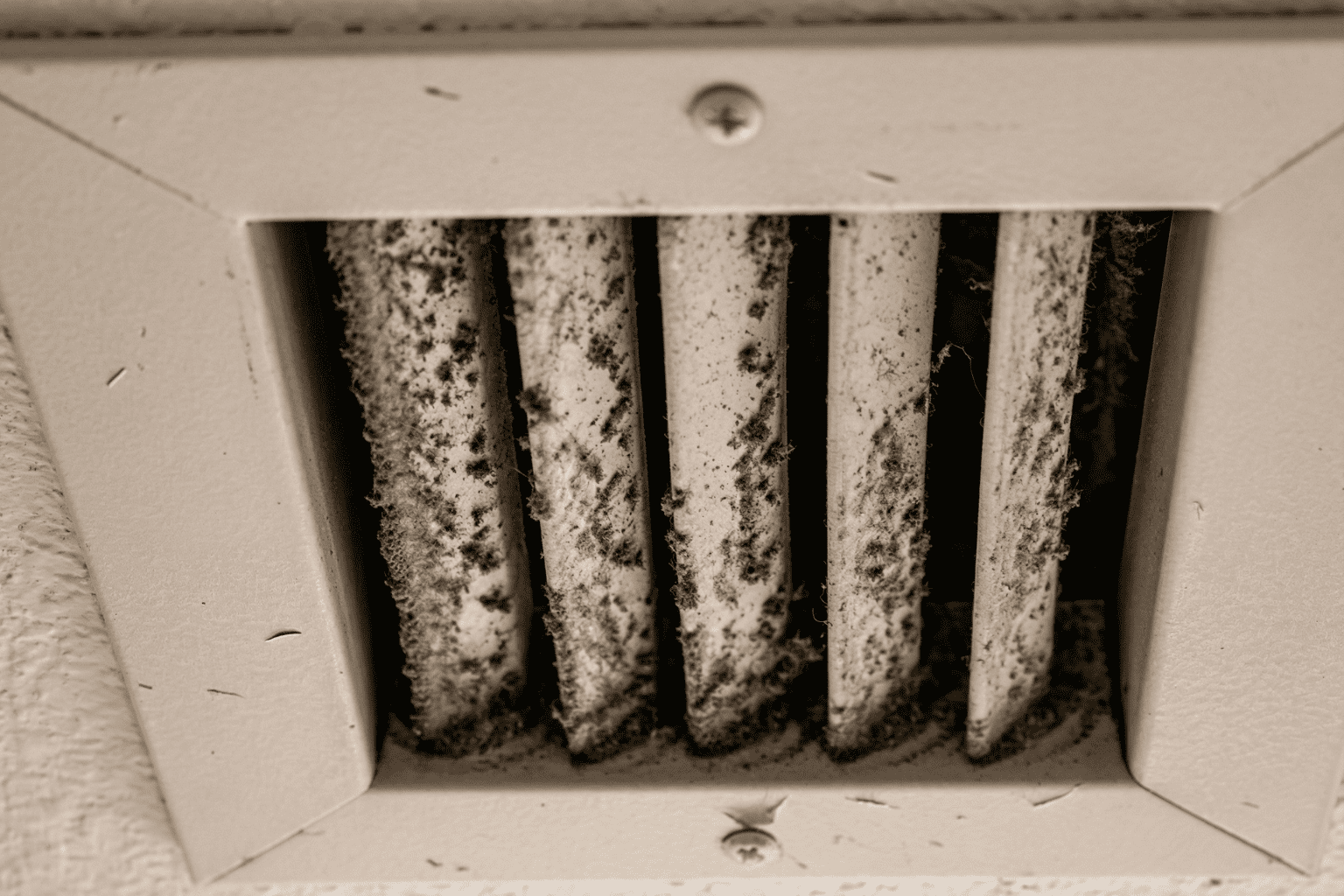
5 Warning Signs Your Air Ducts Need Immediate Mold Treatment
Discovering mold in your home is a stressful experience, but when that mold is hidden inside your air ducts, it becomes a 24/7 delivery system for spores and toxins. Because your HVAC system circulates air throughout every room, untreated duct mold can quickly turn a localized issue into a whole-home health crisis.
At United Duct Care, we believe every homeowner should be empowered to recognize the early red flags. Waiting too long doesn't just damage your HVAC system—it compromises the air your family breathes.
The Danger of HVAC Mold: Unlike mold on a bathroom wall, duct mold is often invisible. It feeds on the dust and moisture inside your vents, releasing microscopic spores every time your AC or heater kicks on.
The Anatomy of HVAC Mold Growth
Mold requires three things to thrive: moisture, a food source (dust/organic matter), and a dark, stagnant environment. Your air ducts provide all three, especially during humid seasons or if your system has a clogged condensate drain. Once a colony is established, standard duct cleaning isn't enough; you need a professional anti-microbial mold treatment to kill the roots and prevent regrowth.
5 Warning Signs You Cannot Ignore
1. The Persistent "Musty" or "Earthy" Odor
If you notice a smell similar to wet socks or a damp basement specifically when your air is running, mold is likely present. These are Microbial Volatile Organic Compounds (mVOCs) being released as the mold grows. If the smell goes away when the system is off but returns when it’s on, the source is definitely in the ductwork.
2. Visible Black or Green Spots on Vent Covers
By the time you see dark spots on your supply registers (the metal grates on your ceiling or floor), the infestation inside the ducts is likely significant. These spots are often "Black Mold" (Stachybotrys chartarum) or Aspergillus, both of which require professional remediation.
3. Unexplained Health Symptoms Indoors
Are you or your family members experiencing "Sick Building Syndrome"? Common symptoms include:
- Frequent headaches that disappear when you leave the house.
- Persistent coughing, sneezing, or itchy eyes.
- Fatigue and dizziness.
- Increased asthma attacks or respiratory distress.
4. Moisture or Standing Water in the HVAC System
If you see water pooling in your drain pan or condensation dripping from your duct joints, mold is a mathematical certainty. Standing water creates the high-humidity environment mold needs to colonize your fiberglass insulation or metal duct walls.
5. "Fuzzy" Growth on the Evaporator Coil
During a routine inspection, if you see a white, grey, or green "fuzz" on the AC coils, your system is circulating air through a living filter of mold. This not only pollutes your air but drastically increases your energy bills by restricting airflow.
Mold Treatment vs. Basic Duct Cleaning
| Feature | Standard Duct Cleaning | Professional Mold Treatment |
|---|---|---|
| Primary Goal | Removes loose dust and hair. | Kills biological growth and spores. |
| Method | Negative pressure/Vacuuming. | EPA-approved anti-microbial fogging. |
| Prevention | Does not prevent regrowth. | Leaves a protective barrier on surfaces. |
How United Duct Care Treats Your Home
Our Professional Mold Treatment is a multi-step process designed for total elimination:
- Source Identification: We find the leak or humidity issue that caused the mold in the first place.
- Mechanical Cleaning: We remove the physical mold structures using HEPA-filtered vacuums.
- EPA-Approved Sanitization: We utilize an anti-microbial "fogging" process that coats the interior of the ducts, killing mold at the microscopic level.
- Prevention: We often recommend UV Light Installation as a follow-up to ensure mold can never grow back on your coils.
Frequently Asked Questions
Can I just spray bleach into my vents?
No. Never spray bleach into your HVAC system. It is corrosive to metal and does not effectively kill mold on porous surfaces like duct liner. It can also release toxic fumes into your home.
How long does a mold treatment take?
A thorough professional treatment typically takes 3 to 5 hours depending on the size of the home and the severity of the growth.
Is the treatment safe for pets and children?
Yes. We use EPA-registered botanically-based or hospital-grade disinfectants that are safe for indoor environments once the process is complete.
Don't Let Mold Compromise Your Air
If you suspect mold in your air ducts, every day you wait allows the problem to spread. Protect your property and your health with a professional inspection from United Duct Care.
Book a Mold Inspection Call 888-351-8505